Company News

GaN 65W 4-Port Desktop Charger-Designed by ZONSAN

Views : 834
Author : Emma
Update time : 2024-07-22 19:13:03

GaN 65W 4-Port Desktop Charger-Designed by ZONSAN


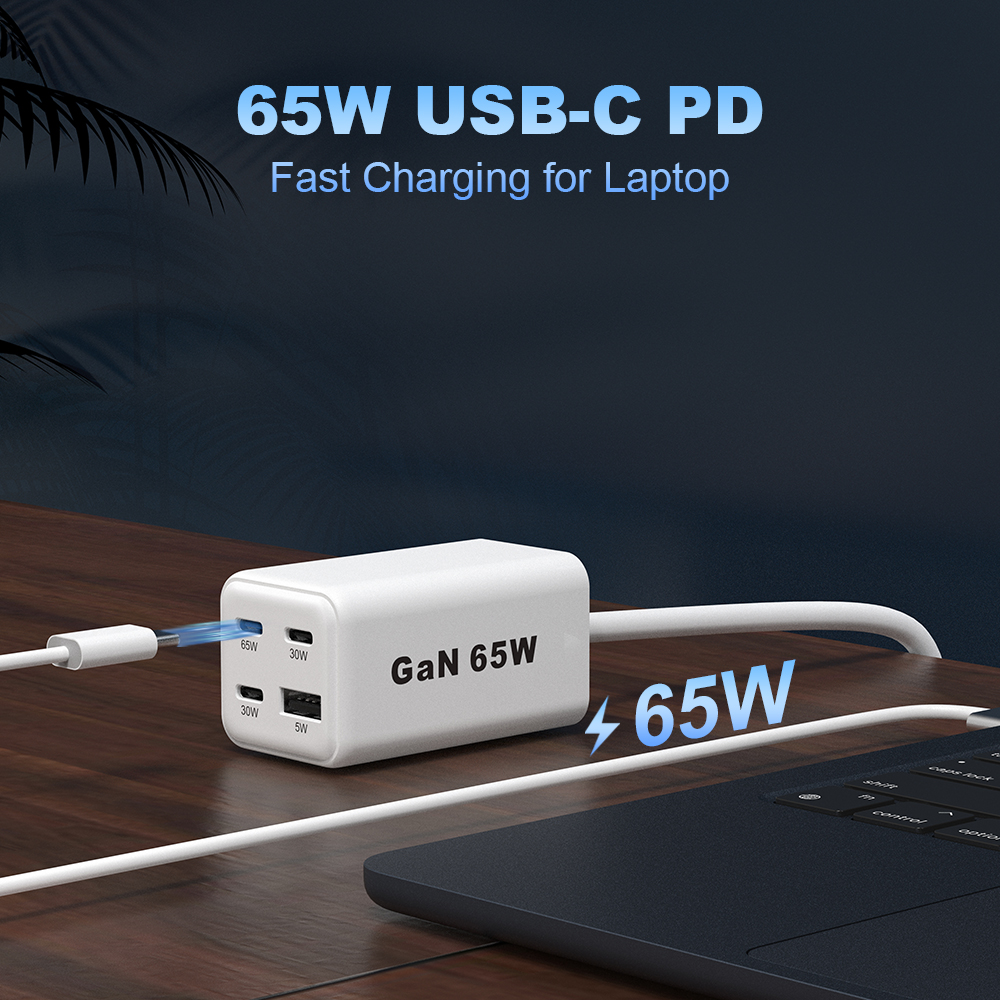
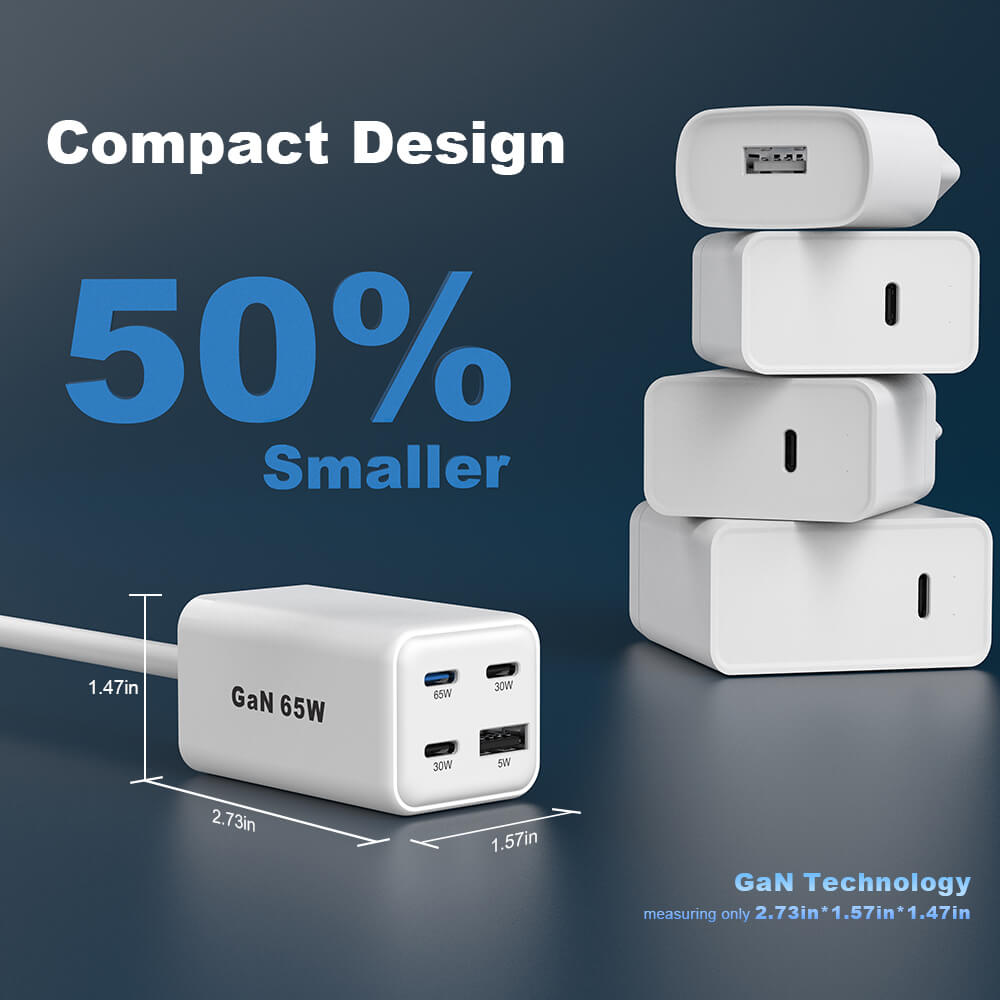
ZONSAN Desktop 4-port Charger is the best solution to keep 4 devices charged up simultaneously, with  65W of charging power and 3 ports USB-C PD, it enables you to recharge your MacBook Air and iPad Pro and phones at full speed at a time.
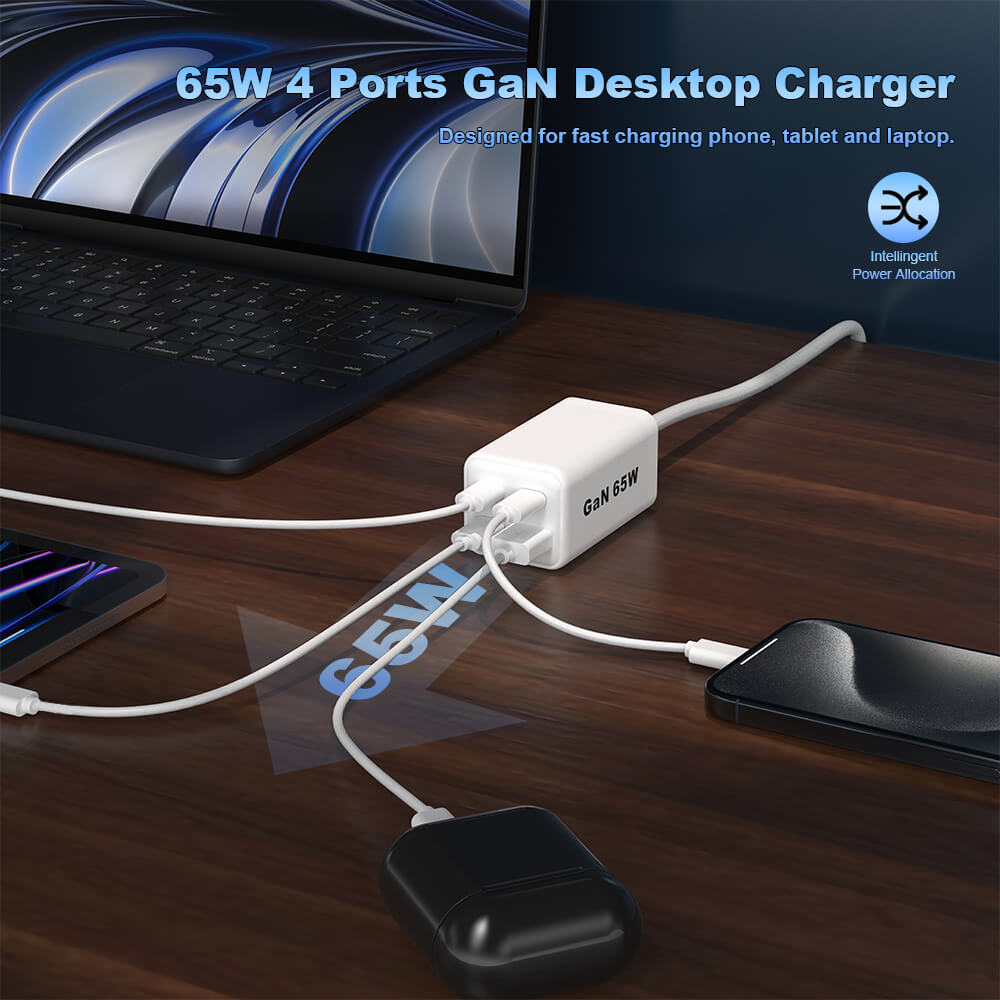
65W gan charger

Specifications:

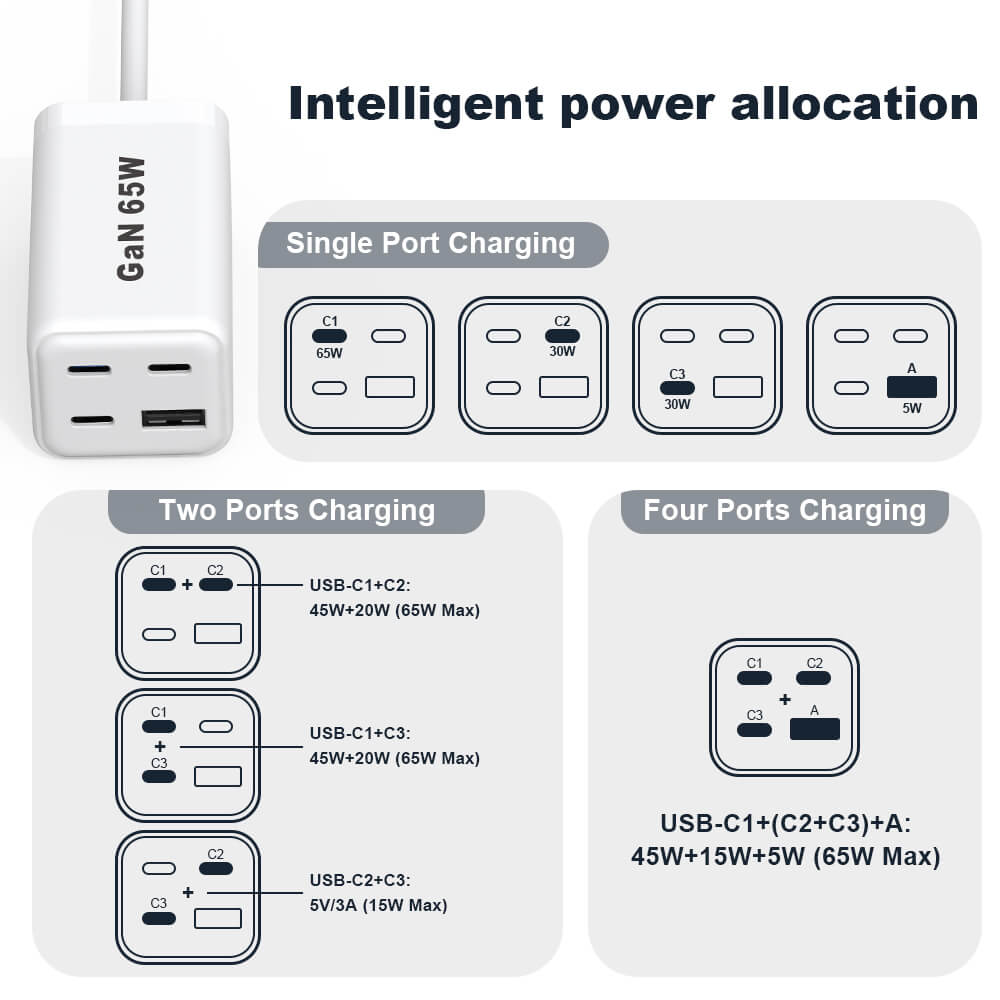
  1. USB-C1 port: PD 65W
  2. USB-C2/C3 ports: PD 30W
  3. USB-A port: 5V/1A(5W)
  4. USB-C1+ C2/C3: 45W+20W (65W MAX)
  5. USB-C2+C3: 5V/3A (15W)
  6. USB-C1+A: 45W+ 18W(63W MAX)
  7. USB-C1+C2+C3+A: 45W+15W+5W(65W MAX)
 
Featured
1. 3 USB-C PD Ports + 1 USB A Ports, 65W Total Output
2. GaN Power Tech, compact design,
3. Intelligent Power Allocation
4. Extraordinary Compatibility
65W 4 PORT CHARGER

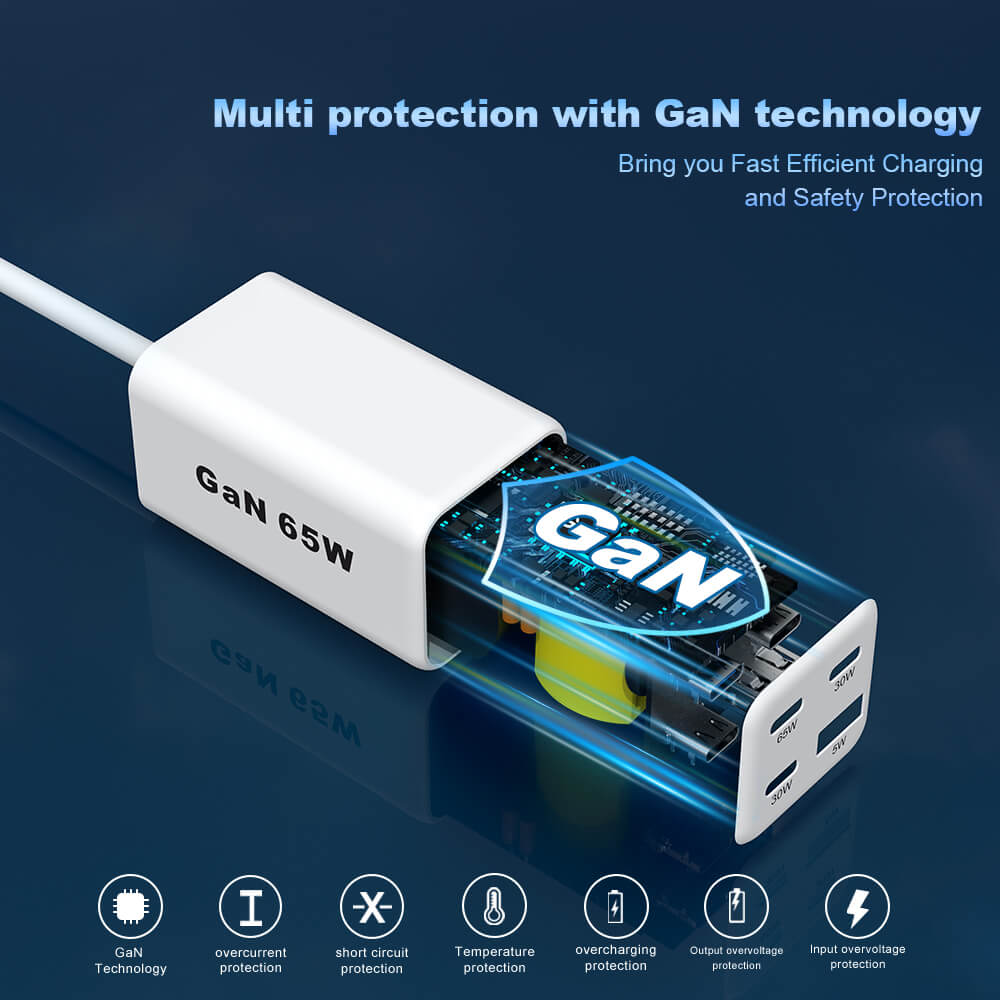
Superior Safety

Our exclusive MultiProtect safety system provides total protection for you and your devices.
 

High-Speed Charging

Our exclusive MultiProtect safety system provides total protection for you and your devices.
 
65W pd fast charger
Related News
Read More >>
Why Does My USB-C Charger Make a Buzzing or Whining Noise? Causes, Testing and Factory Solutions Why Does My USB-C Charger Make a Buzzing or Whining Noise? Causes, Testing and Factory Solutions
Sep .10.2026
A USB-C charger may make a buzzing or whining sound because magnetic components such as transformers and inductors can vibrate during high-frequency switching. The sound can be more noticeable at no load or light load when the charger enters burst-mode operation. A faint, stable sound may be normal, while loud or sudden noise combined with overheating or charging interruptions should be investigated.
Why Does My USB-C Charger Keep Disconnecting? Causes, Testing and Factory Solutions Why Does My USB-C Charger Keep Disconnecting? Causes, Testing and Factory Solutions
Sep .09.2026
A USB-C charger may keep disconnecting because of a damaged cable, poor USB-C connector contact, failed PD negotiation, overcurrent protection, overheating, unstable output, device compatibility or excessive cable resistance. A charger factory should reproduce the problem, test different cables and devices, monitor PD negotiation, check thermal and electrical performance, and then identify the root cause before mass production.