How is the future trend of PD3.2 AVS protocol?
With the release of the iPhone 17 series in 2025 and the official application of the PD 3.2 SPR AVS protocol on its newly launched 40W dynamic power adapter, the fast charging industry is ushering in an important technological iteration. This new standard, launched by the USB-IF Association, is reshaping the fast charging ecosystem in the power range below 100W from both core technology and market structure perspectives.
1. Technical upgrade: From PPS to AVS, more practical and efficient fast charging
AVS did not come into people eyes all of sudden, but rather an important evolution based on PPS. The core differences brings more future potential of AVS over PPS.
More practical voltage regulation accuracy: PPS pursues the ultimate 20mV step adjustment, but this is prone to deviation in practical use due to factors such as cable loss and interface resistance, leading to handshake failure. AVS adopts a step voltage of 100mV, which is sufficient to match the battery voltage requirements and has better anti-interference ability and system stability.
Under the PPS protocol, the maximum output power of the charger is limited by voltage, and the current is also limited at low voltage, resulting in a significant reduction in power. AVS adopts a constant current output design, which can provide the nominal maximum current within the supported voltage range, ensuring efficient charging throughout the entire process.
The transition from EPR to SPR: AVS was first used in the PD 3.1 specification as an EPR (Extended Power Range, 15V-48V) designed for laptops. PD 3.2 lowers it to SPR (standard power range, 9V-20V) within 100W, allowing mainstream devices such as smartphones and tablets to also enjoy this advanced technology.
2. Market explosion: from Apple leading to third-party brands fully stepping in
Apple's adoption is a key catalyst for the popularization of AVS, and the huge market demand is attracting all parties in the industry chain to quickly layout.
Diversified product forms: In addition to Apple's official 40W dynamic power adapter, multiple third-party products supporting PD 3.2 SPR AVS have emerged in the market.
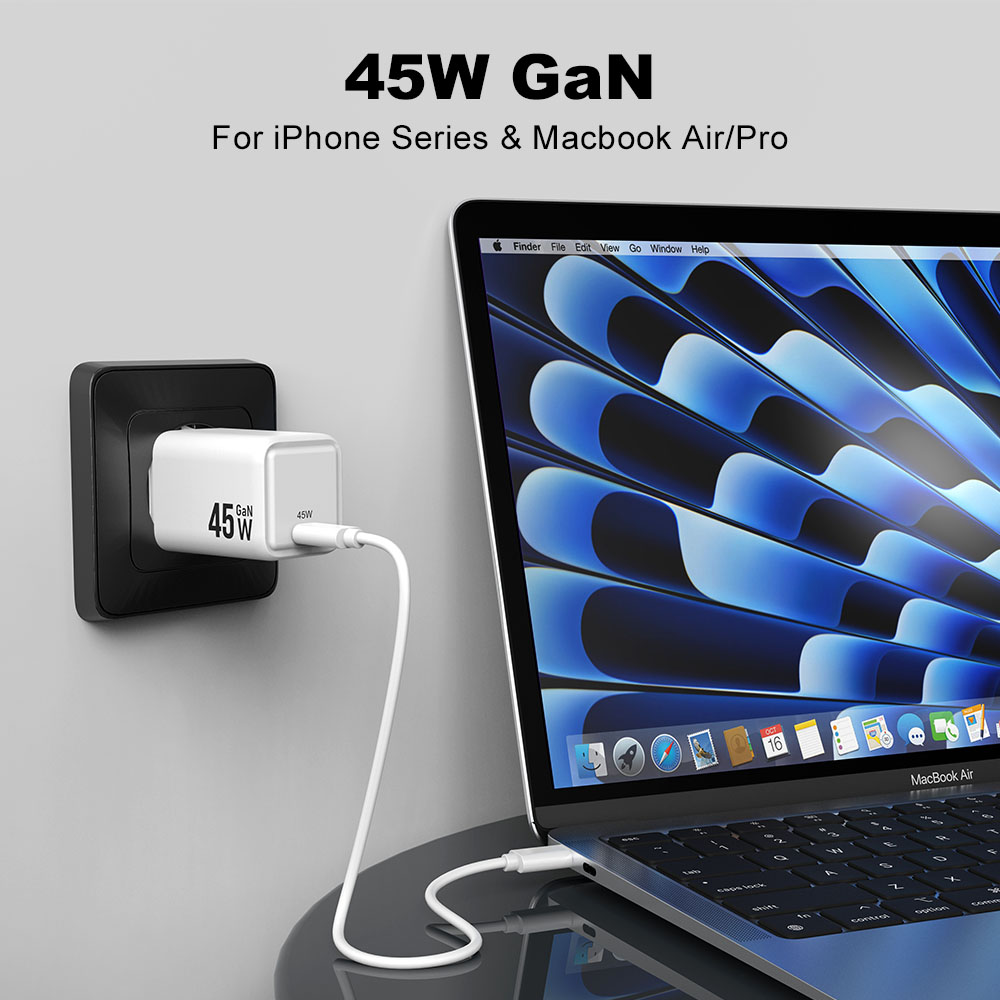
Ultimate portability: such as the ZX-1U88T model launched by ZONSAN, which features a mini size and high power density, making it easy to carry.
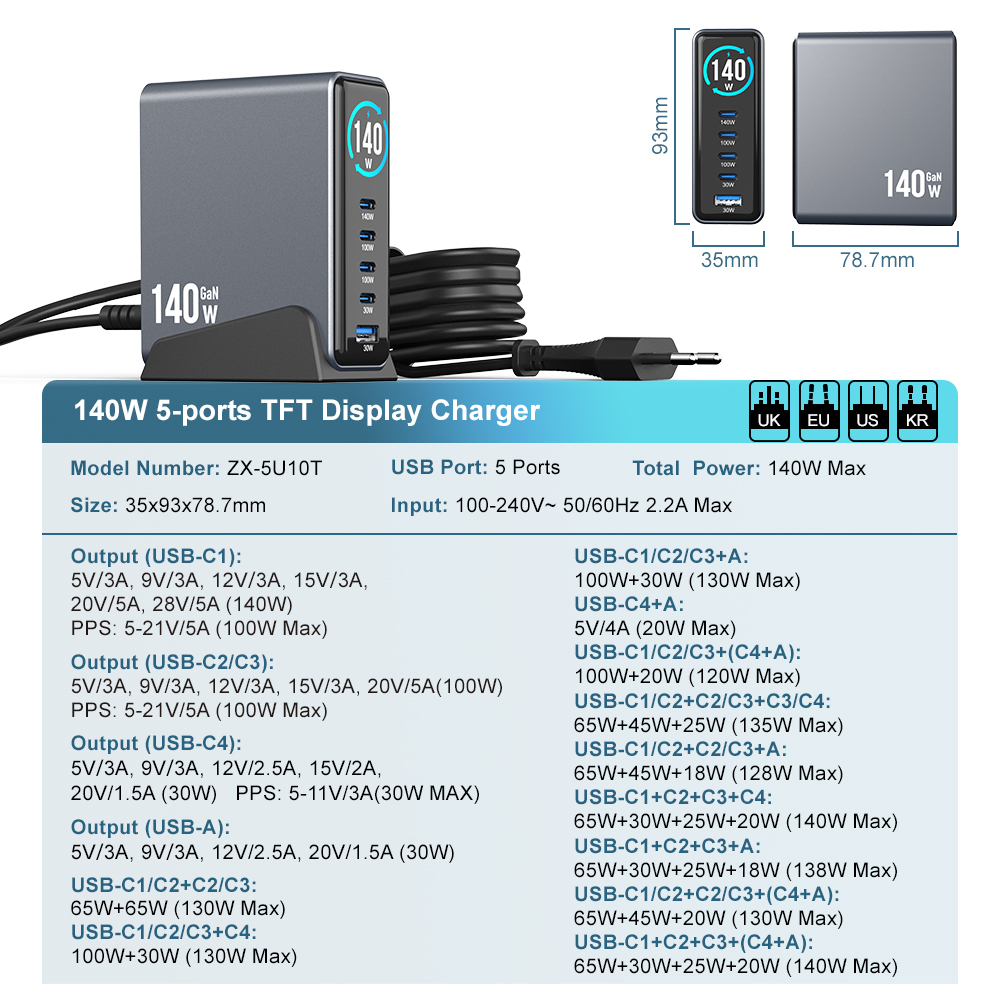
 Multi port desktop charging: such as ZONSAN's model ZX-5U10T with TFT display screen, it meets the fast charging needs of multiple devices at the same time and integrates innovative functions such as modularity and desktop management.
 3. Industry chain collaboration: Chip manufacturers have completed technical upgrade
The explosion of terminal products are closely connected with support of chips manufacturer. Several China chip manufacturers have taken the lead in launching solutions that support AVS, providing a solid technological foundation for the industry
4. Future evolution: intelligence, integration, and OTA upgrade
Smart Charging and Ecological Integration: The AVS protocol enables chargers to dynamically adjust voltage in real-time according to device requirements. Coupled with the development of AI hardware and more intelligent devices, it facilitates safer and more efficient energy management.
Protocol integration and OTA upgrade: New products generally support multiple protocols such as PD 3.2 AVS, UFCS, and QC simultaneously, offering enhanced compatibility. It's worth mentioning that products like the AI electric small mixer for sugar factories have already supported obtaining AVS protocol support through OTA (over-the-air upgrade), enabling the hardware to continuously evolve.
Unified fast charging experience across multiple devices: One of Apple's primary motivations for promoting AVS may be to enhance the charging experience across its entire product range, from the iPhone to the MacBook. In the future, a charger that supports AVS may potentially provide ideal fast charging services for all Apple devices.
From feedback from brand owners in the market, PD3.2 AVS charger are warmly welcomed by end users. And users are willing to paying for the new technology. PD3.2 will turn out to be the majoy trend in the market, even though there is no device device to support AVS charging yet. Be careful to choose the right usb charger for your devices.